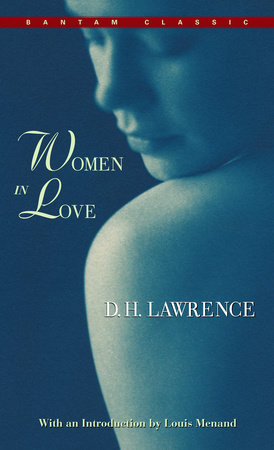
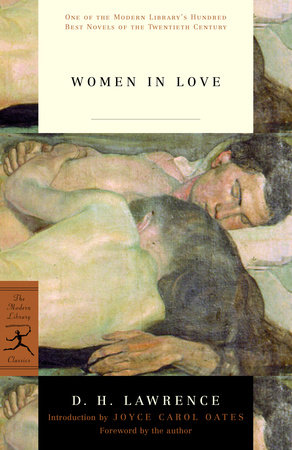
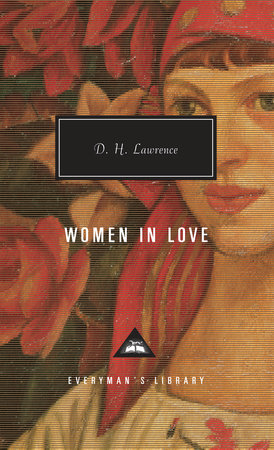
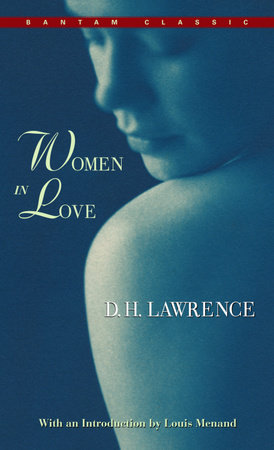
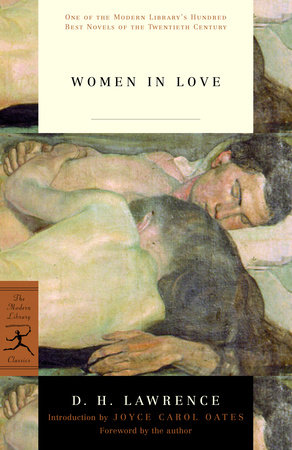
It opens with sisters Ursula and Gudrun Brangwen, characters who also appeared in The Rainbow, discussing marriage, then walking through a haunting landscape ruined by coal mines, smoking factories, and sooty dwellings. Soon Gudrun will choose Gerald, the icily handsome mining industrialist, as her lover; Ursula will become involved with Birkin, a school inspector–and an erotic interweaving of souls and bodies begins. One couple will find love, the other death, in Lawrence’s lush, powerfully crafted fifth novel, one of his masterpieces and the work that may best convey his beliefs about sex, love, and humankind’s ongoing struggle between the forces of destruction and life.
Author
D.H. Lawrence
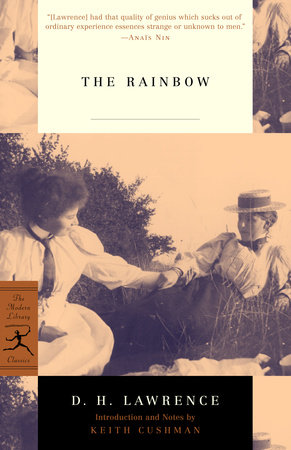
D. H. Lawrence, whose fiction has had a profound influence on twentieth-century literature, was born on September 11, 1885, in a mining village in Nottinghamshire, England. His father was an illiterate coal miner, his mother a genteel schoolteacher determined to lift her children out of the working class. His parents’ unhappy marriage and his mother’s strong emotional claims on her son later became the basis for Lawrence’s Sons and Lovers (1913), one of the most important autobiographical novels of this century. In 1915, his masterpiece, The Rainbow, which like its companion novel Women in Love (1920) dealt frankly with sex, was suppressed as indecent a month after its publication. Aaron’s Road (1922); Kangaroo (1923), set in Australia; and The Plumed Serpent (1926), set in Mexico, were all written during Lawrence’s travels in search of political and emotional refuge and a healthful climate. In 1928, already desperately ill, Lawrence wrote Lady Chatterley’s Lover. Banned as pornographic, the unexpurgated edition was not allowed legal circulation in Britain until 1960. D. H. Lawrence called his life, marked by struggle, frustration, and despair, “a savage enough pilgrimage.” He died on March 2, 1930, at the age of forty-four, in Vence, France.
Learn More about D.H. LawrenceAuthor
D. H. Lawrence
The son of a miner, the prolific novelist, poet, and travel writer David Herbert Lawrence was born in Eastwood, Nottinghamshire, in 1885. He attended Nottingham University and found employment as a schoolteacher. His first novel, The White Peacock, was published in 1911, the same year his beloved mother died and he quit teaching after contracting pneumonia. The next year Lawrence published Sons and Lovers and ran off to Germany with Frieda Weekley, his former tutor’s wife. His masterpieces The Rainbow and Women in Love were completed in quick succession, but the first was suppressed as indecent and the second was not published until 1920. Lawrence’s lyrical writings challenged convention, promoting a return to an ideal of nature where sex is seen as a sacrament. In 1928 Lawrence’s final novel, Lady Chatterley’s Lover, was banned in England and the United States for indecency. He died of tuberculosis in 1930 in Venice.
Learn More about D. H. Lawrence