
Best Seller
Ebook
Published on Jul 24, 2013 | 320 Pages

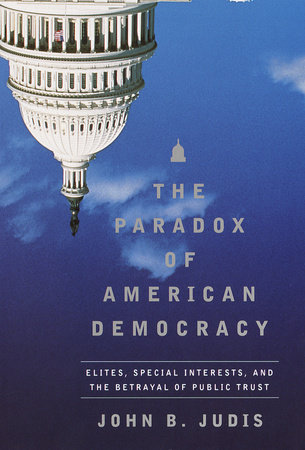
John B. Judis, one of our most insightful political commentators, most rational and careful thinkers, and most engaged witnesses in Washington, has taken on a challenge that even the most concerned American citizens shrink from: forecasting the American political climate at the turn of the century. The Paradox of American Democracy is a penetrating examination of our democracy that illuminates the forces and institutions that once enlivened it and now threaten to undermine it. It is the well-reasoned discussion we need in this era of unrestrained expert opinions and ideologically biased testimony.
The disenchantment with our political system can be seen in decreasing voter turnout, political parties co-opted by consultants and large contributors, the corrupting influence of “soft money,” and concern for national welfare subverted by lobbying organizations and special-interest groups. Judis revisits particular moments—the Progressive Era, the New Deal, the 1960s—to discover what makes democracy the most efficacious and, consequently, most inefficacious. What has worked in the past is a balancing act between groups of elites—trade commissions, labor relations boards, policy groups—whose mandates are to act in the national interest and whose actions are governed by a disinterested pursuit of the common good. Judis explains how the displacment of such elites by a new lobbying community in Whashington has given rise to the cynicism that corrodes the current political system.
The Paradox of American Democracy goes straight to the heart of every political debate in this country.
The disenchantment with our political system can be seen in decreasing voter turnout, political parties co-opted by consultants and large contributors, the corrupting influence of “soft money,” and concern for national welfare subverted by lobbying organizations and special-interest groups. Judis revisits particular moments—the Progressive Era, the New Deal, the 1960s—to discover what makes democracy the most efficacious and, consequently, most inefficacious. What has worked in the past is a balancing act between groups of elites—trade commissions, labor relations boards, policy groups—whose mandates are to act in the national interest and whose actions are governed by a disinterested pursuit of the common good. Judis explains how the displacment of such elites by a new lobbying community in Whashington has given rise to the cynicism that corrodes the current political system.
The Paradox of American Democracy goes straight to the heart of every political debate in this country.
Author
John B. Judis
John Judis is the author of William F. Buckley: Patron Saint of the Conservatives. He is a senior editor at The New Republic, as well as a writer-at-large for GQ and a columnist for The American Prospect. His work has appeared in The New York Times Magazine, The Washington Post, The Washington Monthly, and The Wilson Quarterly, among other publications. He lives in Silver Spring, Maryland.
Learn More about John B. JudisYou May Also Like
Cheever
Paperback
$24.00
The Immense Journey
Paperback
$13.00
The Company We Keep
Paperback
$22.00
Endgame
Paperback
$30.00
White Rural Rage
Paperback
$20.00
Factory Girls
Paperback
$20.00
What Can I Do?
Paperback
$18.00
The Future Is History (National Book Award Winner)
Paperback
$18.00
This Is All I Got
Paperback
$18.00
×