“Fabbri writes with the remnants of an innocence she once possessed.” —Leila Guerriero, author of The Difficult Ghost
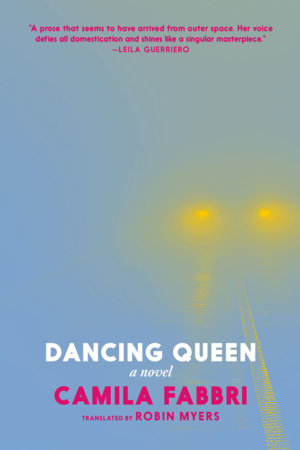
“Camila Fabbri’s prose seems to have arrived in one piece from outer space. Her voice defies all domestication.” —Leila Guerriero, author of The Difficult Ghost
“Camila Fabbri is a meticulous observer but not a passive one: she doesn’t renounce the dream that words can do something, change something, have real effects outside the bounds of the book.” —Alejandro Zambra, author of Chilean Poet
“Who is—what is—Camila Fabbri? A mind-blowing, mind-blown next-door Emily Brontë? A secret language spoken and written to be learned by reading her and shivering? David Lynch’s best friend? An alien entity taking Polaroids of what was always there but invisible to us? Who knows? But I’m sure of one thing: It’s been a long time since I met someone or something like this, and it’s going to be a long time before I meet someone or something like Fabbri again. I can’t get over it. I don’t want to get over it. Now you try; I dare you.” —Rodrigo Fresán, author of Melvill
“I see her as a young woman able to get away from herself by tracing circles around her belly button. Vicious circles, Ionesco would say. She makes a classic tradition as fresh as a head of lettuce.” —Marta Sanz, author of My Clavicle: And Other Massive Misalignments
“The voice of Camila Fabbri’s novel combines violence and tenderness, costumbrismo and a hallucinatory tone, sisterhood and a profound solitude, the appearance of an anaesthetized body and an internal revolt: the voice of Camila Fabbri’s novel is that of a stranger, Camus-like, ready to scream at any moment.” —Marta Sanz, author of My Clavicle: And Other Massive Misalignments
“A story about a break-up and an existential crisis: Is it possible to save oneself from oneself? Camila Fabbri leads her protagonist on a search for redemption yet does so without deluding herself into thinking that identity or affection are fixed. Dancing Queen portrays instability, what is fleeting and ungraspable, as a treasure that may make life worth living.” —Juan Pablo Villalobos, author of I’ll Sell You a Dog
“Camila Fabbri works with a distorted material she doesn’t seek to straighten but let’s grow (. . .) Imagine a glass hit by a stone that hasn’t collapsed but shattered, Fabbri’s prose is like the splinters in the crystal.” —Selva Almada, author of Dead Girls






 QUICK VIEW