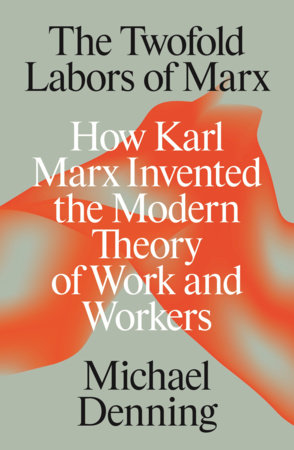

Marx was the Darwin of labor, founding the modern critical theory of work: the first full reconstruction and elaboration of Marx’s theory.
It is often said that Marx was right about capital, but wrong about labor. The Twofold Labors of Marx challenges that verdict by turning Capital on its head, reconstructing and elaborating its critical theory of labor. Placing Marx’s own labors amidst the crisis of artisanal labor, the emerging factory system, and the revolutionary overthrow of enslaved and enserfed labor, as well as the remaking of the sciences and philosophies of work, it explores Marx’s account of the metabolism and metamorphosis of labor, follows the circuit of labor as well as the circuit of capital, and argues that the “mystery of wages” is as central as the “fetishism of commodities,” the theory of “surplus population” and “labor movement” as the theory of “surplus value” and the movements of capital. Rejecting any metaphysics or fetish of labor, Marx’s twofold labors remain central to any politics of emancipation.