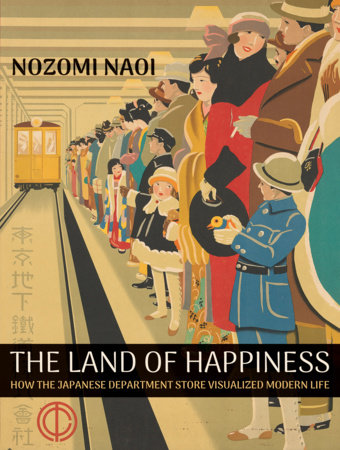
A fascinating look at how Japanese department stores of the twentieth century influenced modern life, identity, and the concept of a dreamworld—and why they continue to loom so large in our imagination.
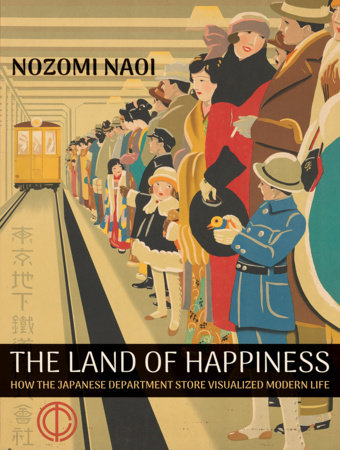
The Land of Happiness explores the far-reaching influence of the Japanese department store on modern life and our imaginations. In this gorgeously illustrated volume, Nozomi Naoi explains how Japanese department stores modeled “the new modern Japanese life and identity” through print media and design, physical and imagined space, and the new experiences that these spaces offered. The stores created the notion of a modern subject enjoying a “land of happiness”—and this, in turn, shaped the wider sociological context, including emerging roles for women and perceptions of coloniality.
The book focuses on three areas: the mediascape of proliferating department store posters, advertisements, commercial design, promotional magazines, and merchandise; the physical space, such as the Western-style architecture that characterized many of these early department stores, and the imagined “modern space” created within their walls; and, finally, the production of a novel “dreamworld,” which included dining spaces with children’s menus, elevators, escalators, and more.
While the research on department stores and their role in the quotidian experience is vast, there is nothing like this study, which is uniquely grounded in an art historical approach that draws upon the visual media environment of early twentieth-century Japan and its impact on the everyday.






 QUICK VIEW