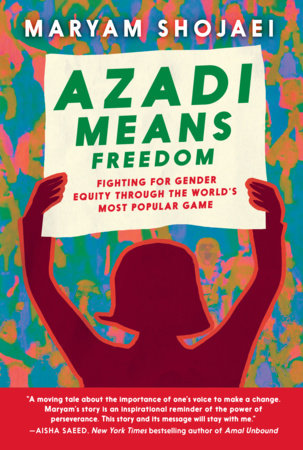
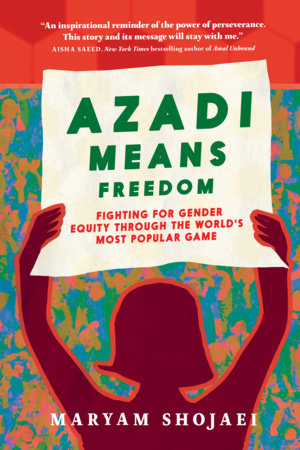
“In this captivating memoir, Iranian civil rights activist Shojaei shares how women have struggled against the Iranian government and FIFA in their attempts to watch soccer games in person since the 1979 Iranian Revolution, or Islamic Revolution. Shojaei holds a personal connection to soccer as her brother, Masoud, was the captain of the Iranian National Soccer Team; however, the author, her sister, and her mother never saw him play a game at the National Stadium, ironically renamed Azadi, which means freedom in Farsi. The ban against women watching male athletes in person was not a formally written law but instead a cultural issue upheld by the Iranian Soccer Federation. Shojei is particularly effective when discussing how the establishment of Islamic law affects women citizens and the concurrent idea that gender alone defines individuals. Placing her own campaign, My Fundamental Right, within the larger context of Iranian civil rights movements enables readers to truly understand how pervasive the simple desire to watch a soccer game is within Iran. The text shines light on the political situation of the country, such as how participating in protests risks arrest, public shaming, and even death, as shown by the cases of Sahar Khodayari in 2019 and Mahsa Amini in 2022. International media worked with Shojaei to pressure FIFA to intervene, and the memoir ends with FIFA officially requesting and being somewhat granted the allowance of women to attend soccer matches within Tehran’s Azadi Stadium in 2019. Black-and-white photographs appear throughout and a preface and afterword are included.VERDICT Highly recommended for readers who enjoyed Fearless Females by Marta Breen, The Girls in the Wild Fig Tree by Nice Leng’ete, or other works about gender, equity, and freedom.”
—School Library Journal
“A moving tale about the importance of one’s voice to make a change. Maryam’s story is an inspirational reminder of the power of perseverance. This story and its message will stay with me.” —Aisha Saeed, New York Times bestselling author of Amal Unbound
“Maryam Shojaei’s book Azadi Means Freedom: Fighting for gender equity through the world’s most popular game, is a truly passionate and informative account of her activism and perseverance in the fight to lift the Iranian Stadium ban on Women. But Maryam’s story is not just about a stadium ban, it is about love of family, about the power of sports as a tool for diplomacy, about friendships and a shared humanity, and it is about the constant need to keep fighting for the basic human rights of women everywhere. Wonderful read!”—Kely Nascimento, co-founder of HADAF Global and daughter of soccer legend Pelé
“Despite its name, which means freedom in Farsi, women were barred from entering Tehran’s Azadi Stadium until 2019, something activist and soccer fan Shojaei was determined to change.
Following the 1979 Islamic Revolution, women lost many personal freedoms. For Shojaei, challenging the stadium ban became a way to increase awareness about rampant repression. In 2014, while she was living in Washington, D.C., she launched her online campaign, “My Fundamental Rights.” It evolved into a movement that took her to soccer tournaments worldwide as well as FIFA and UNESCO headquarters. Standing on the shoulders of other brave Iranian women, Shojaei used her position as a naturalized Canadian citizen and the support of her brother Masoud, captain of the Iranian National Soccer Team, to challenge FIFA to uphold its own gender nondiscrimination rules. This inspiring, tightly focused narrative highlights Shojaei’s fight for equality and the dangers she faced; it doesn’t mention the struggles of the Iranian women’s national soccer team. Shojaei’s fierce authenticity shines through her prose, bolstering the already compelling narrative. Three early chapters offer an abridged history of Iran, and occasional black-and-white photos heighten the story’s impact by providing visual context. Shojaei, who was awarded the Sport for Human Rights Award in 2019, emphasizes community and solidarity, stating that she accepted “on behalf of all the women’s rights activists in Iran who had been fighting for this cause for years.”
A riveting account showing that change can begin with a dream. (Nonfiction. 13-18).”
—Kirkus Reviews
“In vivid prose, Shojaei focuses on a right as basic as being able to participate in and watch sports, to tell the larger story of how unelected men have denied human rights to Iranian women and girls. The irony that Tehran’s main stadium is called Azadi, which means freedom, is not lost.”
—Salil Tripathi, Board member, PEN International, and author of The Colonel Who Would Not Repent







 QUICK VIEW