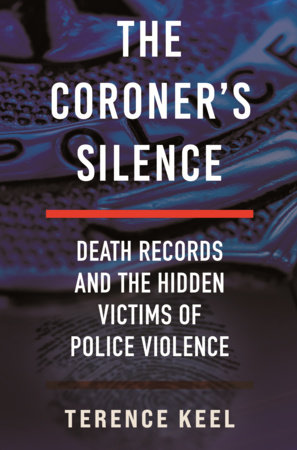
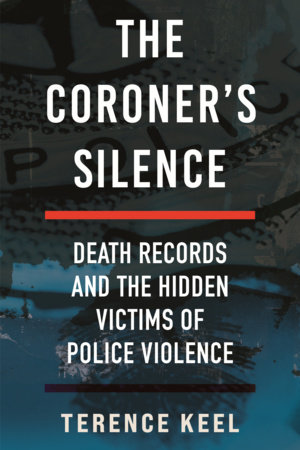
“The Coroner’s Silence reveals how death investigation itself helps conceal police violence. Terence Keel meticulously exposes a bureaucratic machinery in which science and medicine are weaponized to disguise in-custody deaths as natural or unavoidable. This searing exposé will enrage, grieve, and ultimately galvanize readers toward transforming the institutions that uphold such cruelty.”
—Ruha Benjamin, author of Viral Justice: How We Grow the World We Want
“[A] stunning achievement. Terence Keel takes us inside the death investigation system and offers a harrowing picture of carcerality in the US. With the eye of a scientist and an artist, and with the help of those who have lost loved ones in the system, he shows us the horror of what happens in American jails and prisons. Reading this book changes how one sees this country and the people who bear the brunt of its contradictions. A must-read in these troubling times.”
—Eddie S. Glaude Jr., author of Begin Again
“For a country that leads the world in police killings, we want to believe that a trained, independent medical examiner will conduct an autopsy and help get at the truth. Not so. In this sobering account, Terence Keel deftly navigates a complicated maze of history, procedure, bureaucracy, reports, testimony, misdirection, and obfuscation to get at the real truth: the coroner, constrained by structural racism, politics, and moral panics, is part of the problem. The Coroner’s Silence is a big part of the solution.”
—Robin D. G. Kelley, author of Freedom Dreams
“Far beyond the police killings that make headlines, The Coroner’s Silence powerfully lays bare a staggering yet concealed pattern of deaths in custody. Drawing on nearly a thousand autopsies, years of fieldwork, and deep collaboration with impacted communities, Terence Keel weaves searing personal narrative with incisive analysis to expose how the forensic system shields law enforcement from accountability by burying the truth. This courageous and essential book demands that we confront not only police violence but also the underlying inhumanity of a society that criminalizes and abandons those marginalized by profound inequality—and allows the state to kill them with impunity.”
—Dorothy Roberts, author of Killing the Black Body and Torn Apart
“Data and dignity denied. Distrust and disinformation amplified. Accountability missing. Keel’s unflinching autopsy of the embodied realities of US deaths due to police and carceral violence exposes how long-standing systemic legal, medical, and carceral ‘failures,’ in fact, successfully operate to entrench injustice. The antidotes? Transparency and transformative justice.”
—Nancy Krieger, professor of social epidemiology, Harvard T. H. Chan School of Public Health







 QUICK VIEW