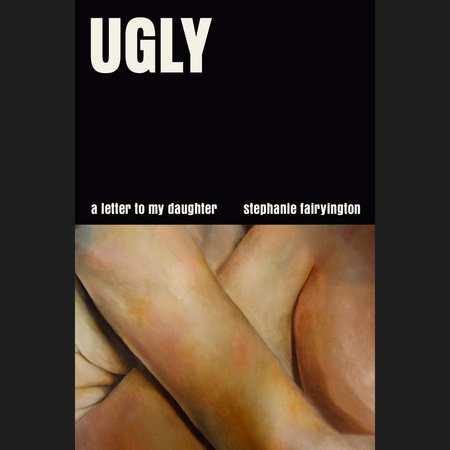
“As a bittersweet ode to hope and a consideration of ugliness as a tool of resistance, Ugly has a powerful grace.” —Andi Zeisler, Salon
“Ugly is an aspirational book, an attempt to explore how else we might live inside our body and with one another. It represents a parent’s attempt to remake society into a welcoming place for her child—or, failing that, to make her child into the kind of person who can see past society’s most damaging messages. This tension—between working toward a better world and arming her child against the one we have—leads to some of the book’s most interesting and difficult moments.”—The Atlantic
“A powerful cautionary warning. . . . Rousing and often affecting, charting the messy road self-understanding often takes. . . . There’s great comfort and inspiration to be found in Fairyington’s counsel.”—Observer
“A richly textured and thought-provoking read.”—Dallas Voice
“An anthropological lesson about our society’s own nefarious history with beauty standards. . . . Fairyington weighs the parenting conundrum of how to encourage your children to be themselves and celebrate their appearance while also acknowledging how doing so feeds the beauty-industrial complex.”—The Cut
“Incisive.”—Autostraddle
“Part cultural unpacking of ‘ugliness’ throughout history, part memoir of queer motherhood, Ugly is still figuring it out, and that’s the point. Writing as much for herself as for the daughter whom she’s addressing, Fairyington invites readers to self-interrogate, but to do so with empathy.”—Harvard Magazine
“[A] bold debut.”—The Millions
“Ugly is beautiful, a rigorous ladyballs-out polemic that also tells the most raw, tender, against-all-odds story of parenthood that I’ve ever read. Steph Fairyington and her family are quietly heroic in their will to have what most people are able to take for granted, a warm and loving family unmolested by the blithe incomprehension and cruelty of social norms—particularly the often random norms regarding beauty. Reading it made me sad and outraged anew at the damage that can be done to women, starting in childhood, when they don’t conform to what we decree is beauty, no matter how beautiful they actually are.”—Mary Gaitskill, author of Veronica
“A penetrating, courageous, loving, and deeply moving exploration of girlhood, womanhood, motherhood, and selfhood.”—Stephanie Coontz, author of For Better and Worse: The Complicated Past and Challenging Future of Marriage
“A polemic, a memoir, and an important addition to the feminist canon, Ugly is a beautiful book and I am so incredibly glad it exists.”— Molly Jong-Fast, author of How to Lose Your Mother
“Stephanie Fairyington displays a keen intellect and a warm inclusive heart as she takes on the looks-based oppression of women and girls in this endearing letter to her young daughter. Although we are all still plagued by the idea of female imperfection, Ugly brings some hope that there are ways to resist lookism—and is a story and analysis sorely needed.”—Joan Jacobs Brumberg, author of Fasting Girls: The History of Anorexia Nervosa
“What I love about the way Stephanie Fairyington takes ownership of ugliness is the freedom it opens up for uncertainty, unlearning, and reinventing—everything from the family and mother-child knots, to cruelty, femininity, anxiety, and normality. She has a talent for vulnerability and a stunning, startling voice.”—Laura Kipnis, author of Against Love: A Polemic
“Ugly is a beautiful book—read it!” —E. Jean Carroll, author of Not My Type: One Woman vs. a President
“Valiant and audacious. . . . Through reflections on parenthood, LGBTQ+ historical context, and biting reprovals of American culture, Fairyington’s concerns for her impressionable offspring are valid, sharp, and urgent, yet eloquently conveyed in this hybrid of maternal love letter and cautionary counsel.”—Kirkus, starred review
“This maternal manifesto makes a major impression.”—Publishers Weekly







 QUICK VIEW