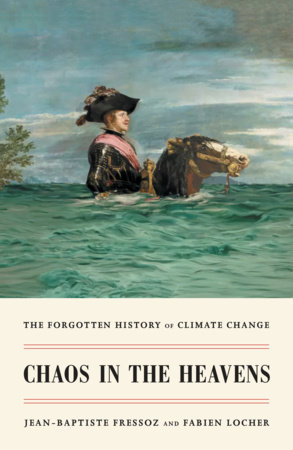
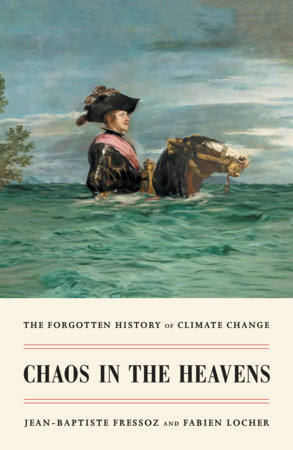
“The upshot of is this brilliant book is that historians have been asking the wrong question. For years we’ve been trying to date the emergence of a consciousness about the impacts of human activities on Earth’s climate. But this awareness long predates modern science, as we learn from the authors’ pathbreaking research. The real question, the one at the heart of their book, is why this awareness was always ambivalent and why it evaporated at the turn of the twentieth century. If you want to understand the long path to the climate crisis, read this book.”
—Deborah Coen, Professor of History & History of Science & Medicine, Yale University
“At once a cry of alarm and a global call to action, Chaos in the Heavens is a pathbreaking book which reveals not only that debates about climate change are centuries-old but also that our current apathy stems primarily from a false story of optimism and capitalist technophilia developed during the 20th century. Perhaps even more important, though, is the warning at the heart of this remarkable book that stories of climate change crises have been used to generate profits and been abused to wield many kinds of power over the most vulnerable on our planet for longer than we realize.”
—Diana K. Davis, University of California at Davis, author of The Arid Lands: History, Power, Knowledge (2016)
“This brilliant book turns upside down the received story of climate science. Fressoz and Locher uncover a rich awareness of climate change in early modern times centered on forests and water. But with the advent of industrial society in the nineteenth century, wealthy Western nations embraced a new indifference to climate. If Fressoz and Locher are right, we need to look to the past to understand why climate mitigation has met with such fierce resistance in the present moment. Behind the climate denial of the oil lobby lies the Victorian faith in the imperturbable sky.”
—Fredrik Albritton Jonsson
“A truly fabulous book — surprising, thought-provoking and rich in historical irony. It is a necessary corrective to the narrative which makes the emergence of climate change as a matter of concern relatively recent and incremental. But it is more enlightening, more provocative and more entertaining than any mere necessity would have required.”
—Oliver Morton, author of The Planet Remade: How Geoengineering Could Change the World and The Moon: A History for the Future







 QUICK VIEW