
Best Seller
Loading
Audiobook Download
Published on Nov 09, 2021 | 10 Hours 22 Minutes

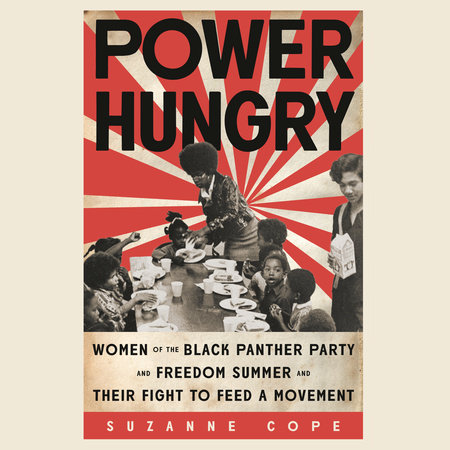
Two unsung women whose power using food as a political weapon during the civil rights movement was so great it brought the ire of government agents working against them.
In early 1969 Cleo Silvers and a few Black Panther Party members met at a community center laden with boxes of donated food to cook for the neighborhood children. By the end of the year, the Black Panthers would be feeding more children daily in all of their breakfast programs than the state of California was at that time.
More than a thousand miles away, Aylene Quin had spent the decade using her restaurant in McComb, Mississippi, to host secret planning meetings of civil rights leaders and organizations, feed the hungry, and cement herself as a community leader who could bring people together—physically and philosophically—over a meal.
These two women’s tales, separated by a handful of years, tell the same story: how food was used by women as a potent and necessary ideological tool in both the rural south and urban north to create lasting social and political change. The leadership of these women cooking and serving food in a safe space for their communities was so powerful, the FBI resorted to coordinated extensive and often illegal means to stop the efforts of these two women, and those using similar tactics, under COINTELPRO–turning a blind eye to the firebombing of the children of a restaurant owner, destroying food intended for poor kids, and declaring a community breakfast program a major threat to public safety.
But of course, it was never just about the food.
In early 1969 Cleo Silvers and a few Black Panther Party members met at a community center laden with boxes of donated food to cook for the neighborhood children. By the end of the year, the Black Panthers would be feeding more children daily in all of their breakfast programs than the state of California was at that time.
More than a thousand miles away, Aylene Quin had spent the decade using her restaurant in McComb, Mississippi, to host secret planning meetings of civil rights leaders and organizations, feed the hungry, and cement herself as a community leader who could bring people together—physically and philosophically—over a meal.
These two women’s tales, separated by a handful of years, tell the same story: how food was used by women as a potent and necessary ideological tool in both the rural south and urban north to create lasting social and political change. The leadership of these women cooking and serving food in a safe space for their communities was so powerful, the FBI resorted to coordinated extensive and often illegal means to stop the efforts of these two women, and those using similar tactics, under COINTELPRO–turning a blind eye to the firebombing of the children of a restaurant owner, destroying food intended for poor kids, and declaring a community breakfast program a major threat to public safety.
But of course, it was never just about the food.
Author
Suzanne Cope
Suzanne Cope is a scholar and narrative journalist, and is the author of Power Hungry: Women of the Black Panther Party and Freedom Summer and Their Fight to Feed a Movement. Her work on themes of political and social change, feminism, food, and culture has appeared in The New York Times, The Atlantic, Los Angeles Review of Books, Food & Wine, BBC, Washington Post, Aeon, and others. She is a professor at New York University.
Learn More about Suzanne CopeYou May Also Like
Chamber Divers
Trade Paperback
$24.00
American Struggle
Hardcover
$38.00
Homes for Living
Trade Paperback
$19.95
On Democracy
Trade Paperback
$12.50
Silent Monoliths
Hardcover
$39.95
Before the Flood
Trade Paperback Original
$22.95
Stand Your Ground
Trade Paperback
$19.95
The Boundless Deep
Hardcover
$35.00
Brought Forth on This Continent
Trade Paperback
$22.00
×