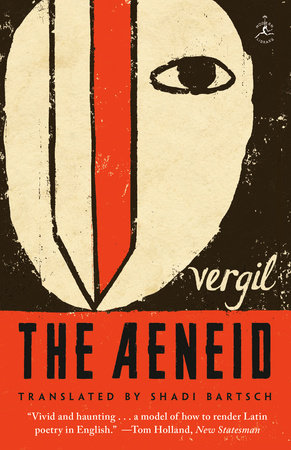
“A remarkable achievement . . . Bartsch manages to keep pace with Virgil’s verse, capturing the ‘dense, lapidate language’ of the Latin, and the energy of the narrative, without unduly flattening its meaning. . . . This translation reads like Virgil.”—The Times Literary Supplement
“Blending solid scholarship with poetic sensibility, classicist [Shadi] Bartsch delivers a new version of the foundational poem of Imperial Rome. . . . [This translation] gives some sense of the Latin and the tautness of its lines; most other English versions are fully 30 percent or more longer than the original, but not hers. . . . Through seductions, treacheries, murders, deicides, and other episodes, Bartsch—her scholarly notes as vigorous as her verse—produces an excellent companion for students of the poem and of Roman history. A robust, readable, reliable translation of a hallmark of world literature.”—Kirkus Reviews (starred review)
“A tight, readable translation with a welcome feminist outlook and savvy engagement with the poem’s political and imperial themes and imperialist legacy. Its natural iambic voice, clear language, and faithfulness to the tight, fast-moving pace of Vergil’s original make it a refreshing way for modern audiences to access the Aeneid’s power.”—Ada Palmer, award-winning author of Reading Lucretius in the Renaissance and the Terra Ignota series
“The best version of the Aeneid in modern English: concise, readable, and beautiful, but also as accurate and faithful to Vergil’s Latin as possible. And the ‘Vergil’s Latin’ that she aims to stick close to reflects modern scholars’ realization that Vergil’s Latin is often difficult and strange; here it helps that she is one of the most accomplished Latinists to translate the poem, knows all the latest research, and is willing to wrestle with the most difficult passages. But this is not a translation just for scholars: Bartsch writes clear, vivid, concise lines that read well and read rapidly as she aims for ‘a kind of parallel to the experience of reading Vergil in Latin.’ The introduction and notes are concise, helpful, informative, provocative, and interesting. Readers, teachers, and students will find the kind of translation they need for private reading or a classroom encounter with the poem, and scholars may find that Bartsch has noticed new things in the Latin.”—James J. O’Hara, George L. Paddison Professor of Latin, University of North Carolina at Chapel Hill







 QUICK VIEW