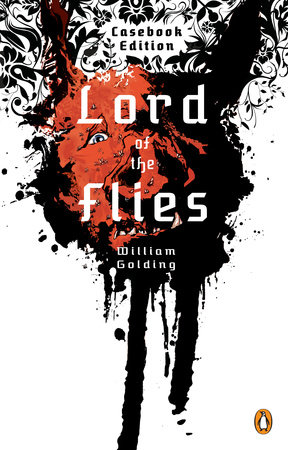
William Golding (1911–1993) was born in Cornwall, England, and educated at Oxford University. His first book, Poems, was published in 1934. Following a stint in the Royal Navy and other activities during and after World War II, Golding wrote his first novel, Lord of the Flies (1954), while teaching school. Many novels followed, including The Inheritors (1955), Pincher Martin (1956), Free Fall (1959), and The Spire (1964), as well as a play, The Brass Butterfly (1958), and a collection of shorter works, The Hot Gates and Other Occasional Pieces (1965). He received the James Tait Black Prize for Darkness Visible (1979) and the Booker Prize for Rites of Passage (1980). In 1983, he was awarded the Nobel Prize in Literature “for his novels which, with the perspicuity of realistic narrative art and the diversity and universality of myth, illuminate the human condition in the world of today.” He was awarded the title “Companion of Literature” by the Royal Society of Literature in 1983 and was knighted by Queen Elizabeth II in 1988. William Golding died in June 1993 and is buried in Holy Trinity churchyard in Bowerchalke, Wiltshire, in England.
Learn More about William Golding







 QUICK VIEW