

Best Seller
Paperback
$19.00
Published on Feb 10, 1993 | 304 Pages

The current return to spiritual values has spawned a surge of interest in the ancient goddess-based religions as a remedy to a long tradition of misogyny in the Western religions.
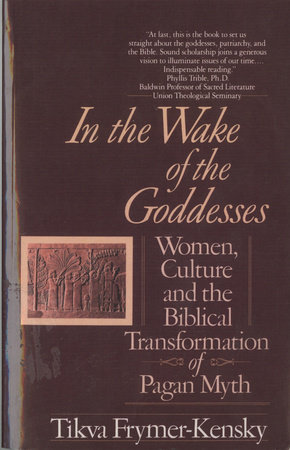
But how accurate are these current representations of the goddess in polytheism? And did Judeo-Christian religion really turn its back on women? These are some of the questions that scholar and feminist Tivka Frymer-Kensky sets out to answer in this iconoclastic study of gender in religions past and present. Her argument, illustrated with fascinating accounts of myth and ritual dating back to the early days of Sumer, Assyria, and Greece, is that although polytheism did accord females an important role, the strict division between male and female actually served to keep women in a subordinate position. The goddesses were progressively "ghettoized": their sphere was eventually relegated to home and hearth, while male gods took over as patrons of wisdom and learning. This dualism was displaced by the Bible, which embraced a surprisingly egalitarian view of human nature in which women were not considered to be inherently inferior.
In a provocative work of biblical scholarship on gender and sexuality, Frymer-Kensky shows that the ideal of monotheism may offer far more to us today than a return to the gender-based worldview of the goddess religions.
But how accurate are these current representations of the goddess in polytheism? And did Judeo-Christian religion really turn its back on women? These are some of the questions that scholar and feminist Tivka Frymer-Kensky sets out to answer in this iconoclastic study of gender in religions past and present. Her argument, illustrated with fascinating accounts of myth and ritual dating back to the early days of Sumer, Assyria, and Greece, is that although polytheism did accord females an important role, the strict division between male and female actually served to keep women in a subordinate position. The goddesses were progressively "ghettoized": their sphere was eventually relegated to home and hearth, while male gods took over as patrons of wisdom and learning. This dualism was displaced by the Bible, which embraced a surprisingly egalitarian view of human nature in which women were not considered to be inherently inferior.
In a provocative work of biblical scholarship on gender and sexuality, Frymer-Kensky shows that the ideal of monotheism may offer far more to us today than a return to the gender-based worldview of the goddess religions.
Author
Tikva Frymer-Kensky
Tikva Frymer-Kensky was a professor of Hebrew bible at the Divinity School at the University of Chicago. She was educated at Yale University. She is the writer of The Judicial Ordeal in the Ancient Near East, In the Wake of the Goddess: Women, Culture, and the Biblical Transformation of Pagan Myth, and Studies in the Bible and Feminist Criticism.
Learn More about Tikva Frymer-KenskyYou May Also Like
Greatest Mystery in the World
Paperback
$7.99
Shamanism As a Spiritual Practice for Daily Life
Paperback
$21.00
Reflections of the Christ Mind
Ebook
$6.99
Stations of the Light
Ebook
$12.99
Going Home
Paperback
$17.00
Acts 1-12
Paperback
$10.00
Sensing Your Hidden Presence
Paperback
$19.00
Acts 13-28
Paperback
$7.99
Goddess Within
Paperback
$26.00
×