
PUBLISHERS WEEKLY
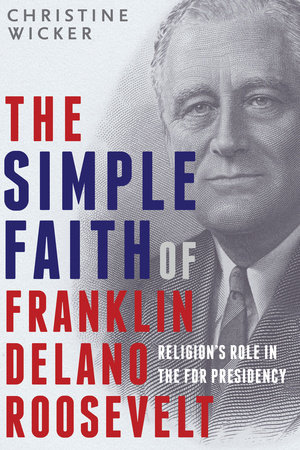
Wicker, formerly a religion writer for the Dallas Morning News, tells a straightforward story of Pres. Franklin D. Roosevelt’s deep religiosity and its influence on his presidency. Wicker traces Roosevelt’s developing of a religious vision from his childhood, where he learned, after seeing his prayers about his father’s health answered, that God actively communicated with people. Wicker then details Roosevelt’s school days at Groton and the onset of polio. Particularly engaging is Wicker’s analysis of Roosevelt’s first inaugural address, illustrating the many instances in the speech where he weaves biblical language and religious precepts into his vision for a nation suffering through the Great Depression. In the address and throughout the remainder of his four terms in office, Roosevelt’s social gospel–the revival of hope through brotherhood–culminates in his speech to the country in which he declares the enduring Christian idea that “we are all members of one another.” Wicker’s appealing little book is a fun glimpse into a previously little-explored corner of F.D.R.’s life.