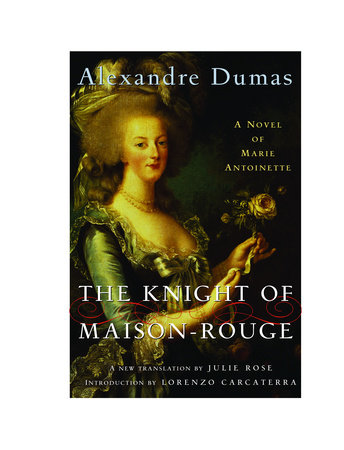

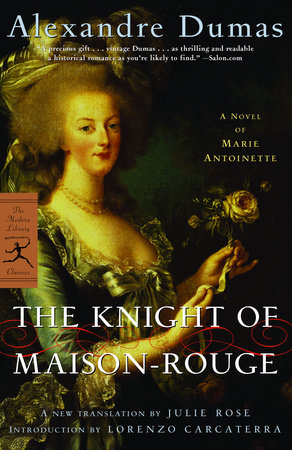

Paris, 1793, the onset of the Terror. Brave Republican Maurice rescues a mys-terious and beautiful woman from an angry mob and is unknowingly drawn into a secret Royalist plot—a plot revolving around the imprisoned Queen of France, Marie Antoinette, and her enigmatic and fearless champion, the Knight of Maison-Rouge. Full of surprising twists, breakneck adventure, conspiracies, swordplay, romance, and heroism, The Knight of Maison-Rouge is an exhilarating tale of selflessness, love, and honor under the shadow of the guillotine. Dumas here is at the very height of his powers, and with this first and only modern translation, readers can once again ride with the Knight of Maison-Rouge.
Author
Alexandre Dumas
Alexandre Dumas (1802–1870) lived a life as romantic as that depicted in his famous novels. He was born in Villers-Cotterêts, France. His early education was scanty, but his beautiful handwriting secured him a position in Paris in 1822 with the du’Orléans, where he read voraciously and began to write. His first play, Henri III et sa cour (1829), scored a resounding success for its author and the romantic movement. His lavish spending and flamboyant habits led to the construction of his fabulous Château de Monte-Cristo, and in 1851 he fled to Belgium to escape creditors. Dumas’s overall literary output reached more than 277 volumes, but his brilliant historical novels made him the most universally read of all French novelists. With collaborators, mainly Auguste Maquet, Dumas wrote such works as The Three Musketeers (1843–1844); its sequels, Twenty Years After (1845) and the great mystery The Man in the Iron Mask (1845–1850); and The Count of Monte Cristo (1844). His work ignored historical accuracy, psychology, and analysis, but its thrilling adventure and exuberant inventiveness continued to delight readers, and Dumas remains one of the prodigies of nineteenth-century French literature.
Learn More about Alexandre Dumas