

Best Seller
Part of History of Canada
The History of Canada Series: Three Weeks in Quebec City
Ebook
Published on May 05, 2015 | 272 Pages



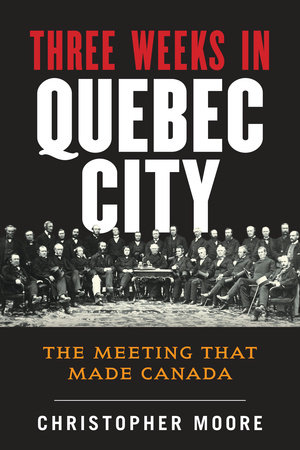
Federation, in principle, had been agreed on at the Charlottetown conference, but now it was time to debate the difficult issues of how a new nation would be formed. The delegates included John A. Macdonald, George Etienne-Cartier, and George Brown. Historian Christopher Moore demonstrates that Macdonald, the future prime minister, surprisingly was not the most significant player here, and Canada could have become a very different place.
The significance of this conference is played out in Canadian news each day. The main point of contention at the time was the issue of power—a strong federal body versus stronger provincial rights. Because of this conference, we have an elected House of Commons, an appointed Senate, a federal Parliament, and provincial legislatures. We have what amounts to a Canadian system of checks and balances. Did it work then, and does it work now?
Author
Christopher Moore
Christopher Moore has been described as Canada’s most versatile writer of history. A winner of the Governor General’s Award and other literary prizes, he writes widely about Canadian history for adults and children. He has also developed historical materials for historic sites, museums, radio, and television, and he speaks frequently to a wide variety of audiences. He writes a long-running column on history and historians for The Beaver: Canada’s History Magazine. A past chair of the Writers’ Union of Canada, Christopher Moore lives in Toronto.
Learn More about Christopher Moore QUICK VIEW
 QUICK VIEW
 QUICK VIEW