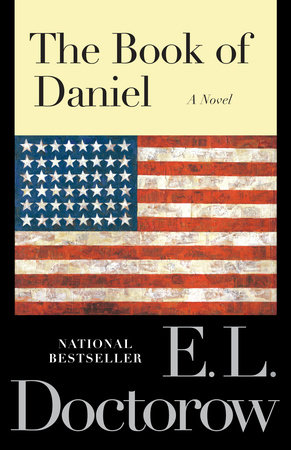

His name is Daniel Isaacson, and as the story opens, his parents have been dead for many years. He has had a long time to adjust to their deaths. He has not adjusted.
Out of the shambles of his childhood, he has constructed a new life—marriage to an adoring girl who gives him a son of his own, and a career in scholarship. It is a life that enrages him.
In the silence of the library at Columbia University, where he is supposedly writing a Ph.D. dissertation, Daniel composes something quite different.
It is a confession of his most intimate relationships—with his wife, his foster parents, and his kid sister Susan, whose own radicalism so reproaches him.
It is a book of memories: riding a bus with his parents to the ill-fated Paul Robeson concert in Peekskill; watching the FBI take his father away; appearing with Susan at rallies protesting their parents’ innocence; visiting his mother and father in the Death House.
It is a book of investigation: transcribing Daniel’s interviews with people who knew his parents, or who knew about them; and logging his strange researches and discoveries in the library stacks.
It is a book of judgments of everyone involved in the case—lawyers, police, informers, friends, and the Isaacson family itself.
It is a book rich in characters, from elderly grand- mothers of immigrant culture, to covert radicals of the McCarthy era, to hippie marchers on the Pen-tagon. It is a book that spans the quarter-century of American life since World War II. It is a book about the nature of Left politics in this country—its sacrificial rites, its peculiar cruelties, its humility, its bitterness. It is a book about some of the beautiful and terrible feelings of childhood. It is about the nature of guilt and innocence, and about the relations of people to nations.
It is The Book of Daniel.
Author
E.L. Doctorow
E. L. Doctorow’s works of fiction include Andrew’s Brain, Homer & Langley, The March, Billy Bathgate, Ragtime, The Book of Daniel, City of God, Welcome to Hard Times, Loon Lake, World’s Fair, The Waterworks, and All the Time in the World. Among his honors are the National Book Award, three National Book Critics Circle awards, two PEN/Faulkner awards, and the presidentially conferred National Humanities Medal. In 2009 he was shortlisted for the Man Booker International Prize, honoring a writer’s lifetime achievement in fiction, and in 2012 he was inducted into the New York State Writers Hall of Fame and won the PEN/Saul Bellow Award for Achievement in American Fiction, which is given to an author whose “scale of achievement over a sustained career [places] him in the highest rank of American literature.” In 2013 he received the Gold Medal for Fiction from the American Academy of Arts and Letters and the Medal for Distinguished Contribution to American Letters from the National Book Foundation. Doctorow died in 2015.
Learn More about E.L. Doctorow