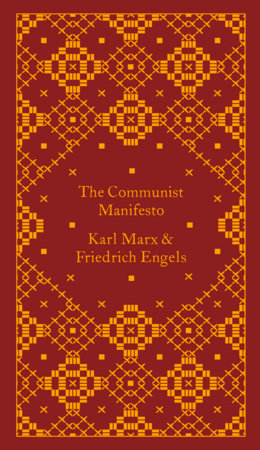
Karl Marx and Friedrich Engels’ landmark text that continues to influence and provoke debate on capitalism and class, now in a stunning clothbound edition designed by Coralie Bickford-Smith.
The Communist Manifesto, Marx and Engels’s revolutionary summons to the working classes, is one of the most important and influential political theories ever formulated. After four years of collaboration, the authors produced this incisive declaration of their idea of Communism, in which they envisage a society without classes, private property or a state. They argue that increasing exploitation of industrial workers will eventually lead to a revolution in which Capitalism is overthrown. This vision provided the theoretical basis of political systems in Russia, China, Cuba and Eastern Europe, affecting the lives of millions.
Penguin Classics is the leading publisher of classic literature in the English-speaking world, representing a global bookshelf of the best works throughout history and across genres and disciplines. Readers trust the series to provide authoritative texts enhanced by introductions and notes by distinguished scholars and contemporary authors, as well as up-to-date translations by award-winning translators.







 QUICK VIEW