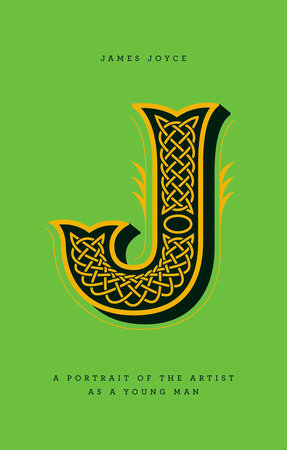
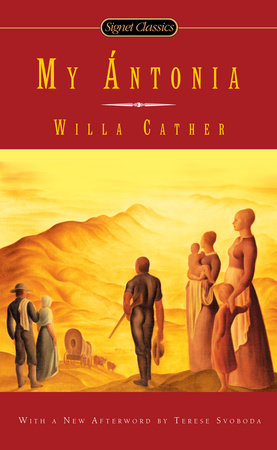
It all begins with a letter. Fall in love with Penguin Drop Caps, a new series of twenty-six collectible and hardcover editions, each with a type cover showcasing a gorgeously illustrated letter of the alphabet. In a design collaboration between Jessica Hische and Penguin Art Director Paul Buckley, the series features unique cover art by Hische, a superstar in the world of type design and illustration, whose work has appeared everywhere from Tiffany & Co. to Wes Anderson’s recent film Moonrise Kingdom to Penguin’s own bestsellers Committed and Rules of Civility. With exclusive designs that have never before appeared on Hische’s hugely popular Daily Drop Cap blog, the Penguin Drop Caps series debuted with an ‘A’ for Jane Austen’s Pride and Prejudice, a ‘B’ for Charlotte Bronte’s Jane Eyre, and a ‘C’ for Willa Cather’s My Antonia. It continues with more perennial classics, perfect to give as elegant gifts or to showcase on your own shelves.
J is for Joyce. From its chronicling of youthful days at Clongowes Wood school to the radical questioning of all convention and the desire “to forge in the smithy of my soul the uncreated conscience of my race,” James Joyce’s highly autobiographical A Portrait of the Artist as a Young Man portrays Stephen Dedalus in his Dublin upbringing. In doing so, it provides an oblique self-portrait of young Joyce himself. At its center lie questions of origin and source, authority and authorship, and the relationship of an artist to his family, culture, and race. Exuberantly inventive in style, A Portrait of the Artist as a Young Man subtly and beautifully orchestrates the patterns of quotation and repetition instrumental in its hero’s quest to create his own character, his own language, life and art: “to express myself in some mode of life or art as freely as I can and as wholly as I can, using for my defense the only arms I allow myself to use—silence, exile, and cunning.”
Author
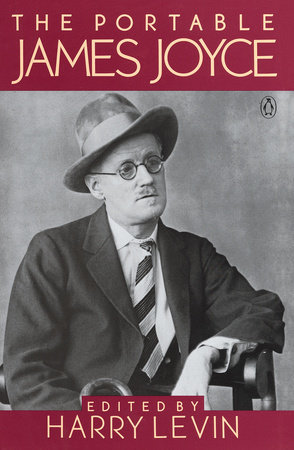
James Joyce
James Joyce, the twentieth century’s most influential novelist, was born in Dublin on February 2, 1882. The oldest of ten children, he grew up in a family that went from prosperity to penury because of his father’s wastrel behavior. After receiving a rigorous Jesuit education, twenty-year-old Joyce renounced his Catholicism and left Dublin in 1902 to spend most of his life as a writer in exile in Paris, Trieste, Rome, and Zurich. On one trip back to Ireland, he fell in love with the now famous Nora Barnacle on June 16, the day he later chose as “Bloomsday” in his novel Ulysses. Nora was an uneducated Galway girl who became his lifelong companion and the mother of his two children. In debt and drinking heavily, Joyce lived for 36 years on the Continent, supporting himself first by teaching jobs, then through the patronage of Mrs. Harold McCormick (Edith Rockerfeller) and the English feminist and editor Harriet Shaw Weaver. His writings include Chamber Music (1907), Dubliners (1914), A Portrait of the Artist as a Young Man (1916), Exiles (1918), Ulysses (1922), Pomes Penyeach (1927), Finnegan’s Wake (1939), and an early draft of A Portrait of a Young Man, Stephan Hero (1944). Ulysses required seven years to complete, and his masterpiece, Finnegan’s Wake, took seventeen. Both works revolutionized the form, structure, and content of the novel. Joyce died in Zurich in 1941.
Learn More about James JoyceIllustrator
Jessica Hische
Jessica Hische grew up in Pennsylvania. She currently lives in San Francisco, where she works as a letterer, illustrator, type designer, and relentless procrastiworker. Clients include Wes Anderson, Dave Eggers, The New York Times, Tiffany & Co., OXFAM America, McSweeney’s, American Express, Target, Victoria’s Secret, Chronicle Books, Nike, and Samsung. website: jessicahische.is | twitter: @jessicahische.
Learn More about Jessica Hische