

Best Seller
Ebook
Published on May 01, 2013 | 432 Pages

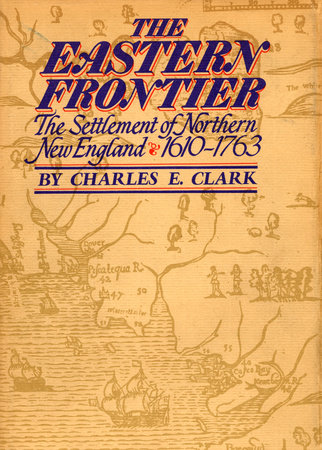
In this fascinating social history of America’s first frontier, Charles Clark brings to life the people and settlements of Maine and New Hampshire before the Revolutionary War. He describes what life was like beyond the Merrimack from the early fishing camps on the coast to the settlement of mid-eighteenth-century wilderness towns in the interior.
The sturdy, independent men who first settled the craggy islands and salt marsh harbors of northern New England were a very different breed from their Puritan brethren to the south—they came to fish and trade, not to pray. Clark depicts their early brawling and lawless settlements, and their later taming by a morality imported from Massachusetts Bay. He demonstrates that to a large extent almost constant warfare molded the history of the region, but even more potent formative influences were the absorption of territory and the imposition of an alien culture by the Puritans of Massachusetts Bay.
Dealing with urban dwellers, pioneers, villagers and country farmers, merchants and fisherman, clergymen and woodsmen, Clark traces the gradual shift from fishing and lumbering to farming; the development of a sophisticated merchant aristocracy; the surveying and laying out of towns in the inland wilds and the rise of manufacturing along rivers and streams; the emotional catharsis of the Great Awakening; and the crusade against France and Catholicism, culminating in the siege of Louisbourg.
Throughout, this absorbing and colorful example of regional history at its best sheds new light on the process of making life work on the nation’s oldest frontier.
The sturdy, independent men who first settled the craggy islands and salt marsh harbors of northern New England were a very different breed from their Puritan brethren to the south—they came to fish and trade, not to pray. Clark depicts their early brawling and lawless settlements, and their later taming by a morality imported from Massachusetts Bay. He demonstrates that to a large extent almost constant warfare molded the history of the region, but even more potent formative influences were the absorption of territory and the imposition of an alien culture by the Puritans of Massachusetts Bay.
Dealing with urban dwellers, pioneers, villagers and country farmers, merchants and fisherman, clergymen and woodsmen, Clark traces the gradual shift from fishing and lumbering to farming; the development of a sophisticated merchant aristocracy; the surveying and laying out of towns in the inland wilds and the rise of manufacturing along rivers and streams; the emotional catharsis of the Great Awakening; and the crusade against France and Catholicism, culminating in the siege of Louisbourg.
Throughout, this absorbing and colorful example of regional history at its best sheds new light on the process of making life work on the nation’s oldest frontier.
Author
Charles Clark
Charles Edwin Clark was born in Brunswick, Maine, in 1929. He received his AB from Bates College in 1951, his MS from the Graduate School of Journalism, Columbia University, in 1952, and his PhD in American civilization from Brown University in 1966. In the 1950s he served in the US Navy as an air intelligence officer and as a reporter for the Valley News, West Lebanon, New Hampshire, and the Providence Journal and Evening Bulletin, Providence, Rhode Island. From 1965 to 1967 he was an assistant professor of history at Southeastern Massachusetts Technological Institute. Clark passed away in 2013.
Learn More about Charles ClarkYou May Also Like
A Reforming People
Ebook
$4.99
SUBVERSIVE GENEALOGY
Ebook
$17.99
A Scattered People
Ebook
$14.99
A Child of Christian Blood
Ebook
$4.99
The Windward Road
Ebook
$14.99
Legends of the American Desert
Ebook
$9.99
Journal of a Residence on a Georgian Plantation in 1838-1839
Ebook
$16.99
The Oregon Trail
Ebook
$10.99
Lenin
Paperback
$23.00
×