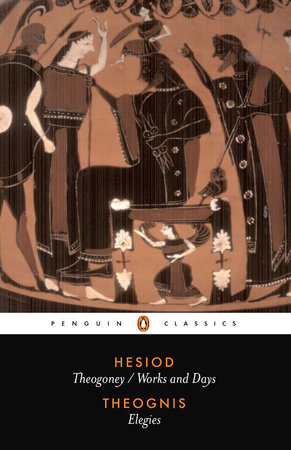
Together these two poets—Hesiod, the epic poet, and Theognis, the elegist—offer a superb introduction to the life and thought of ancient Greece.
Hesiod’s Theogony is a primitive creation of myth: it contains all the elements of a story—dark forces, sex and violence—but can also be read as philosophical speculation of a high order, and it soars to religious heights in its hymns. In contrast, his Works and Days, also included in this volume, is an intriguing combination of agricultural advice, moral maxims, social and political comment and superstitious lore.
Theognis, the savage and suspicious author of many short elegaic poems, writing some two centuries later than Hesiod, ranges from serious theological questioning to satire and intensely personal love lyrics, and reflects the moods and themes of an aristocratic poet who mourned a changing Greek society.
Penguin Classics is the leading publisher of classic literature in the English-speaking world, representing a global bookshelf of the best works throughout history and across genres and disciplines. Readers trust the series to provide authoritative texts enhanced by introductions and notes by distinguished scholars and contemporary authors, as well as up-to-date translations by award-winning translators.







 QUICK VIEW