
Best Seller
Paperback
$24.00
Published on Sep 25, 2007 | 88 Pages

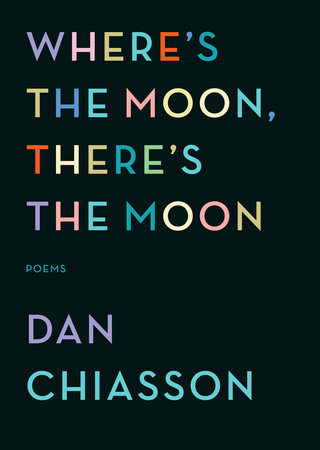
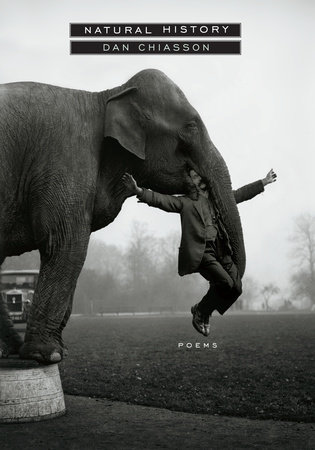
Dan Chiasson, hailed as “one of the most gifted poets of his generation” upon the appearance of his first book, takes inspiration for his stunning new collection from the Historia Naturalis of Pliny the Elder.
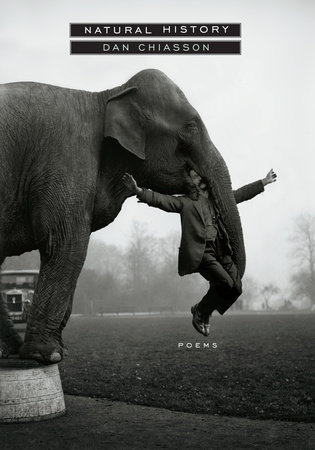
“What happens next, you won’t believe,” Chiasson writes in “From the Life of Gorky,” and it is fair warning. This collection suggests that a person is like a world, full of mysteries and wonders–and equally in need of an encyclopedia, a compendium of everything known. The long title sequence offers entries such as “The Sun” (“There is one mind in all of us, one soul, / who parches the soil in some nations / but in others hides perpetually behind a veil”), “The Elephant” (“How to explain my heroic courtesy?”), “The Pigeon” (“Once startled, you shall feel hours of weird sadness / afterwards”), and “Randall Jarrell” (“If language hurts you, make the damage real”). The mysteriously emotional individual poems coalesce as a group to suggest that our natural world is populated not just by fascinating creatures–who, in any case, are metaphors for the human as Chiasson considers them– but also by literature, by the ghosts of past poetries, by our personal ghosts. Toward the end of the sequence, one poem asks simply, “Which Species on Earth Is Saddest?” a question this book seems poised to answer. But Chiasson is not finally defeated by the sorrows and disappointments that maturity brings. Combining a classic, often heartbreaking musical line with a playful, fresh attack on the standard materials of poetry, he makes even our sadness beguiling and beautiful.
On Tour
Author
Dan Chiasson
DAN CHIASSON is the author of five books of poetry, including Bicentennial (2014) and The Math Campers (2020), and a book of literary criticism. A longtime contributor to The New Yorker and The New York Review of Books, Chiasson is the Lorraine Chao Wang Professor of English and Chair of the English Department at Wellesley College.
Learn More about Dan ChiassonYou May Also Like
Left-handed
Paperback
$20.00
Kindertotenwald
Paperback
$22.00
Selected Poems of Mark Strand
Paperback
$22.00
U and I
Paperback
$19.00
On the Road with Bob Dylan
Paperback
$22.00
The Continuous Life,
Paperback
$22.00
The Story of Our Lives
Paperback
$19.95
The Beforelife
Paperback
$24.00
Wheeling Motel
Paperback
$19.00
×