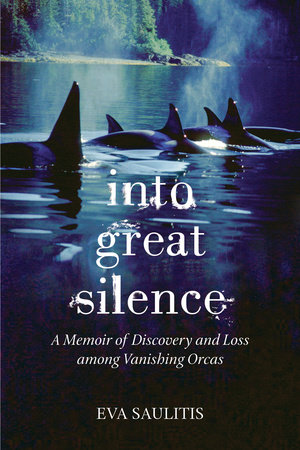
“Beginning in the halcyon years before the Exxon Valdez oil spill and continuing to this day, Saulitis has tracked individually known orcas to the brink of their population’s extinction. Into Great Silence is at once a love song to a wild place, an elegy, an inquiry into purpose and change, and a call to bring all our senses and ways of knowing to understanding and protecting our fragile world.”
—Pushcart Prize-winning author Nancy Lord
“A vivid, moving depiction of a way of life tragically becoming increasingly endangered.”
—Kirkus Reviews
“There’s great tenderness in this book, and great pathos–sometimes one wonders if it’s worth the pain to pay attention amidst the gathering storm, but this powerful account shows us that it’s precisely by keeping track of the world around us that we stay human.”
—Bill McKibben, author of Eaarth: Making a Life on a Tough New Planet
“Through Saulitis’s growing understanding of biology, and through her heart, we soon find ourselves immersed in the fate of the third culture – Prince William Sound’s intensely social, long-lived, black-and-white whales with brains considerably larger than ours. Fascinating suddenly becomes too cramped a word for either orcas or this book of self-discovery.”
—Douglas Chadwick, author of The Grandest of Lives: Eye to Eye with Whales
“[A] sensitively written memoir…Readers who enjoyed Alexandra Morton’s Listening to Whales: What the Orcas Have Taught Us will be fascinated by Saulitis’ account of her often remove, cold, and wet life as a field biologist and her respect for the whales and the people who lived around her.”
—Library Journal
“Saulitis’ stunning and sorrowful “book of contemplation” elucidates the discipline, tedium, danger,and bliss of whale studies; the solace she finds in art; and her intense relationships with her fellow orcaexperts. Candid, transfixing, and cautionary, Saulitis celebrates and mourns for a wondrous and imperiled species.”
—Booklist
“The book is a must read—at once a visceral reminder of the fragility of our ancient planet, a requiem for its rapidly diminishing nature and a call to arms.”
—American Scientist







 QUICK VIEW