“It was…unnecessary for me to fret about who the murderer was: Everybody was.”
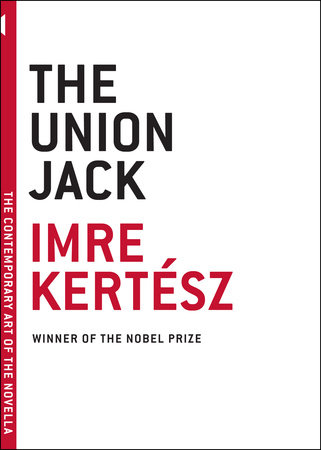
A haunting, never-before-translated, autobiographical novella by the 2002 Nobel Prize winner.
An unnamed narrator recounts a simple anecdote, his sighting of the Union Jack—the British Flag—during the Hungarian Revolution of 1956, in the few days preceding the uprising’s brutal repression by the Soviet army. In the telling, partly a digressive meditation on “the absurd order of chance,” he recalls his youthful self, and the epiphanies of his intellectual and spiritual awakening—an awakening to a kind of radical subjectivity. In his Nobel address Kertesz remembered:
“I, on a lovely spring day in 1955, suddenly came to the realization that there exists only one reality, and that is me, my own life, this fragile gift bestowed for an uncertain time, which had been seized, expropriated by alien forces, and circumscribed, marked up, branded—and which I had to take back from ‘History’, this dreadful Moloch, because it was mine and mine alone…”
The Contemporary Art of the Novella series is designed to highlight work by major authors from around the world. In most instances, as with Imre Kertész, it showcases work never before published; in others, books are reprised that should never have gone out of print. It is intended that the series feature many well-known authors and some exciting new discoveries. And as with the original series, The Art of the Novella, each book is a beautifully packaged and inexpensive volume meant to celebrate the form and its practitioners.







 QUICK VIEW