


Best Seller
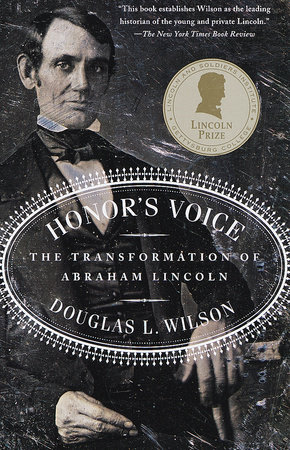
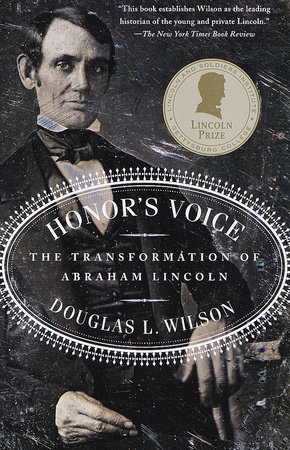
Honor's Voice
Paperback
$24.00
Published on May 25, 1999 | 400 Pages



Author
Douglas L. Wilson
Douglas L. Wilson, co-director, with Rodney O. Davis, of the Lincoln Studies Center at Knox College, is the author Lincoln before Washington: New Perspectives on the Illinois Years (University of Illinois Press, 1997); Herndon’s Informants: Letters and Interviews about Abraham Lincoln (edited with Rodney O. Davis, University of Illinois Press, 1998); and Honor’s Voice: The Transformation of Abraham Lincoln (Alfred A. Knopf, 1998), which was awarded the Lincoln Prize for 1999, and Herndon’s Lincoln (edited with Rodney O. Davis, University of Illinois Press, 2006). The Lincoln Studies Center is currently retained by the Library of Congress to transcribe and annotate documents in its Lincoln Papers for the World Wide Web. He lives in Galesburg, Illinois, Abraham Lincoln’s hometown.
Learn More about Douglas L. Wilson QUICK VIEW
 QUICK VIEW
 QUICK VIEW
 QUICK VIEW
 QUICK VIEW
 QUICK VIEW
 QUICK VIEW
 QUICK VIEW
 QUICK VIEW
 QUICK VIEW