

Best Seller
Ebook
Published on Jan 05, 1999 | 624 Pages

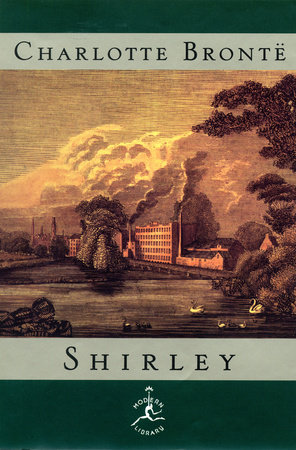
Following the tremendous popular success of Jane Eyre, which earned her lifelong notoriety as a moral revolutionary, Charlotte Brontë vowed to write a sweeping social chronicle that focused on "something real and unromantic as Monday morning." Set in the industrializing England of the Napoleonic wars and Luddite revolts of 1811-12, Shirley (1849) is the story of two contrasting heroines. One is the shy Caroline Helstone, who is trapped in the oppressive atmosphere of a Yorkshire rectory and whose bare life symbolizes the plight of single women in the nineteenth century. The other is the vivacious Shirley Keeldar, who inherits a local estate and whose wealth liberates her from convention.
A work that combines social commentary with the more private preoccupations of Jane Eyre, Shirley demonstrates the full range of Brontë’s literary talent. "Shirley is a revolutionary novel," wrote Brontë biographer Lyndall Gordon. "Shirley follows Jane Eyre as a new exemplar–but so much a forerunner of the feminist of the later twentieth century that it is hard to believe in her actual existence in 1811-12. She is a theoretic possibility: what a woman might be if she combined independence and means of her own with intellect. Charlotte Brontë imagined a new form of power, equal to that of men, in a confident young woman [whose] extraordinary freedom has accustomed her to think for herself….Shirley [is] Brontë’s most feminist novel."
Author
Charlotte Bronte
Charlotte Brontë lived from 1816 to 1855. Jane Eyre appeared in 1847 and was followed by Shirley (1848) and Vilette (1853). In 1854, Charlotte Brontë married her father’s curate, Arthur Bell Nicholls. She died during her pregnancy on March 31, 1855, in Haworth, Yorkshire. The Professor was posthumously published in 1857.
Learn More about Charlotte BronteYou May Also Like
The Moonstone
Paperback
$11.00
A Hazard of New Fortunes
Paperback
$21.00
Utz
Paperback
$22.00
The Nobleman and Other Romances
Paperback
$22.00
The Mill on the Floss
Hardcover
$34.00
Fifty Great Short Stories
Paperback
$8.99
Liza of Lambeth
Paperback
$16.00
The Reef
Hardcover
$25.00
Sons and Lovers
Paperback
$14.00
×