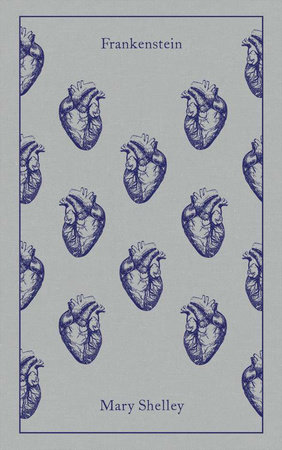
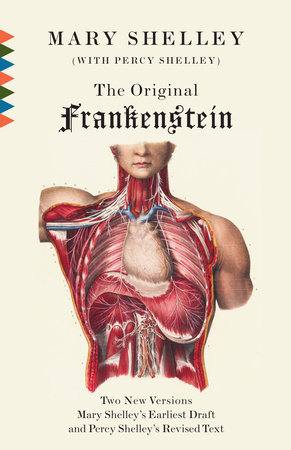
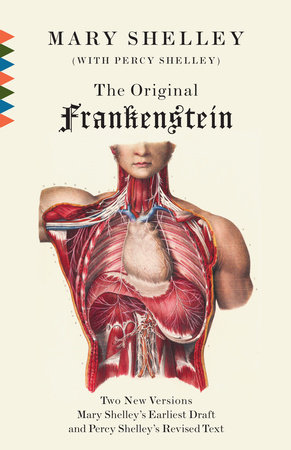
Mary Shelley was born in London in 1797, daughter of William Godwin and Mary Wollstonecraft, famous radical writers of the day. Mary’s mother died tragically ten days after the birth. Under Godwin’s conscientious and expert tuition, Mary’s was an intellectually stimulating childhood, though she often felt misunderstood by her stepmother and neglected by her father. In 1814 she met and soon fell in love with the then unknown Percy Bysshe Shelley, and in July they eloped to the Continent. In December 1816, after Shelley’s first wife, Harriet, committed suicide, Mary and Percy married. Of the four children she bore Shelley, only Percy Florence survived. They lived in Italy from 1818 until 1822, when Shelley drowned following the sinking of his boat Ariel in a storm. Mary returned with Percy Florence to London, where she continued to live as a professional writer until her death in 1851. The idea for Frankenstein came to Mary Godwin during a summer sojourn in 1816 with Percy Shelley on the shores of Lake Geneva, where Lord Byron was also staying. She was inspired to begin her unique tale after Byron suggested a ghost story competition. Byron himself produced “A Fragment,” which later inspired his physician John Polidori to write The Vampyre. Mary completed her short story back in England, and it was published as Frankenstein; or, The Modern Prometheus in 1818. Among her other novels are The Last Man (1826), a dystopian story set in the twenty-first century, The Fortunes of Perkin Warbeck (1830), Lodore (1835), and Falkner (1837). As well as contributing many stories and essays to publications such as the Keepsake and the Westminster Review, she wrote numerous biographical essays for Lardner’s Cabinet Cyclopaedia (1835, 1838–39). Her other books include the first collected edition of Percy Bysshe Shelley’s Poetical Works (4 vols., 1839) and a book based on the Continental travels she undertook with her son Percy Florence and his friends, Rambles in Germany and Italy (1844). Mary Shelley died in London on February 1, 1851.
Learn More about Mary Shelley






 QUICK VIEW