Publishers Weekly
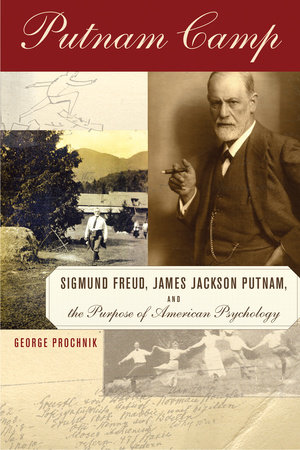
This delightfully written, erudite book intertwines the lives and works of Freud and Putnam, along with cultural and intellectual movements of the time, such as Progressivism, spiritualism, transcendentalism and American Hegelianism.
Kirkus Reviews
The great-grandson of James Jackson Putnam explores the relationship between his ancestor and Freud, as revealed in family archives, in published correspondence and other writings by the principals and in existing biographies and commentaries.
Hartford Courant
Prochnik offers a dazzling serving of bold personalities, brilliant ideas and highly unlikely situations that changed the scope of American science.
For a study of the roots of a heavy intellectual topic, Putnam Camp is delightfully spry and often funny. Prochnik is in uncommonly fine form describing how Freud, Jung and Ferenczi reacted with equal shock and wonder to America, particularly the exotica of New York City’s Chinatown and Coney Island.
This author’s ability to weave a richly compelling and thoroughly human dimension into a complex tale makes Putnam Camp something of a literary rarity: a scientific history that is actually fun to read.
Bookforum, Michael Roth
In Putnam Camp, Prochnik has found a compelling way to connect a specific moment of the past to our more general cultural history. His book can serve readers well who want to consider the contemporary potential of the intersecting legacies of Freudian stoicism and American social hope.
The Weekly Standard, Edwin M. Yoder Jr.
Putnam Camp is…a revealing chronicle of cross-cultural polarities: Boston and Vienna, Jew and Gentile, American and European, sexuality and transcendence. It is also a story of the mechanics of intellectual transmission and, with the exception of an occasional runaway sentence, well told.
The New York Times Book Review
In Putnam Camp, George Prochnik approaches the encounter between Old World and New through Freud’s relationship with James Jackson Putnam.
Prochnik, Putnam’s great-grandson and himself a former mental health counselor, relies on his "opposing parts" — his father’s family were Viennese Jews — and his access to a cache of Putnam family correspondence to add texture to the already well-chronicled story of Freud’s visit and its consequences.
Nathan G. Hale’s Freud and the Americans (1971) remains the definitive study of psychoanalysis’ conquest of America. But if Prochnik adds few new facts, he is an engaging companion on a stroll through quaint surroundings.
The Gay & Lesbian Review Worldwide, Larry Kramer
I cannot overstate how important I believe this book to be….the revolutionary material Prochnik has uncovered–stuff I have never seen, read, or heard about–is that Freud had no trouble with homosexuality….and that he did not mind fantasies that he knew to be homoerotic, and that he himself had such fantasies, including on this particular tripwith Jung himself.
I couldn’t put this book down, but after doing so it took me three days and evenings to absorb it.







 QUICK VIEW