
Best Seller
Loading
Ebook
Published on Mar 05, 2019 | 416 Pages

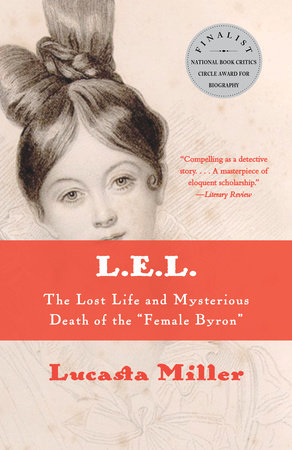
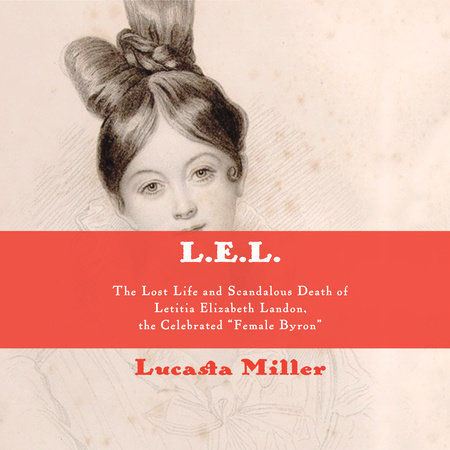
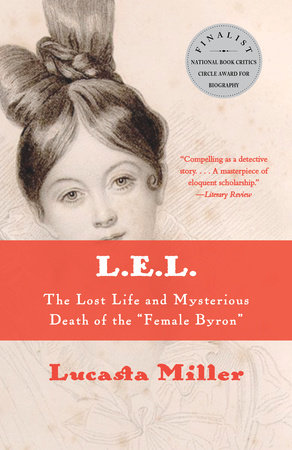
A lost nineteenth-century literary life, brilliantly rediscovered–Letitia Elizabeth Landon, hailed as the female Byron; she changed English poetry; her novels, short stories, and criticism, like Byron though in a woman’s voice, explored the dark side of sexuality–by the acclaimed author of The Brontë Myth (“wonderfully entertaining . . . spellbinding”–New York Times Book Review; “ingenious”–The New Yorker).
“None among us dares to say / What none will choose to hear”–L.E.L., “Lines of Life”
Letitita Elizabeth Landon–pen name L.E.L.–dared to say it and made sure she was heard.
Hers was a life lived in a blaze of scandal and worship, one of the most famous women of her time, the Romantic Age in London’s 1820s, her life and writing on the ascendency as Byron’s came to an end.
Lucasta Miller tells the full story and re-creates the literary London of her time. She was born in 1802 and was shaped by the aftermath of the Napoleonic Wars, a time of conservatism when values were in flux. She began publishing poetry in her teens and came to be known as a daring poet of thwarted romantic love. We see L.E.L. as an emblematic figure who embodied a seismic cultural shift, the missing link between the age of Byron and the creation of Victorianism. Miller writes of Jane Eyre as the direct connection to L.E.L.–its first-person confessional voice, its Gothic extremes, its love triangle, and in its emphasis on sadomasochistic romantic passion.
“None among us dares to say / What none will choose to hear”–L.E.L., “Lines of Life”
Letitita Elizabeth Landon–pen name L.E.L.–dared to say it and made sure she was heard.
Hers was a life lived in a blaze of scandal and worship, one of the most famous women of her time, the Romantic Age in London’s 1820s, her life and writing on the ascendency as Byron’s came to an end.
Lucasta Miller tells the full story and re-creates the literary London of her time. She was born in 1802 and was shaped by the aftermath of the Napoleonic Wars, a time of conservatism when values were in flux. She began publishing poetry in her teens and came to be known as a daring poet of thwarted romantic love. We see L.E.L. as an emblematic figure who embodied a seismic cultural shift, the missing link between the age of Byron and the creation of Victorianism. Miller writes of Jane Eyre as the direct connection to L.E.L.–its first-person confessional voice, its Gothic extremes, its love triangle, and in its emphasis on sadomasochistic romantic passion.
Author
Lucasta Miller
Dr. Lucasta Miller is a British critic and historian who has lectured and broadcast widely on 19th-century literature. Her influential afterlife study, The Bronte Myth, first published in 2001, was reissued in a new edition in 2020; her pioneering biography of the ‘female Byron’ Letitia Landon was shortlisted for the NBCC awards in 2019. She has worked as a profile-writer for the Guardian and contributed to the Financial Times, the Daily Telegraph and the BBC. A former visiting fellow at Lady Margaret Hall, Oxford, she is currently Royal Literary Fund Fellow at the Courtauld Institute and reviews for The Spectator.
Learn More about Lucasta MillerYou May Also Like
Divided Kingdom
Paperback
$15.00
Sonechka
Ebook
$14.99
The Hakawati
Paperback
$22.00
Death of a Murderer
Paperback
$24.00
Blooms of Darkness
Paperback
$24.00
Uproar
Ebook
$6.99
The Children of Sanchez
Paperback
$21.00
Theatre of Fish
Paperback
$19.00
Cities of Salt
Paperback
$19.95
×